


 FR
FR EN
EN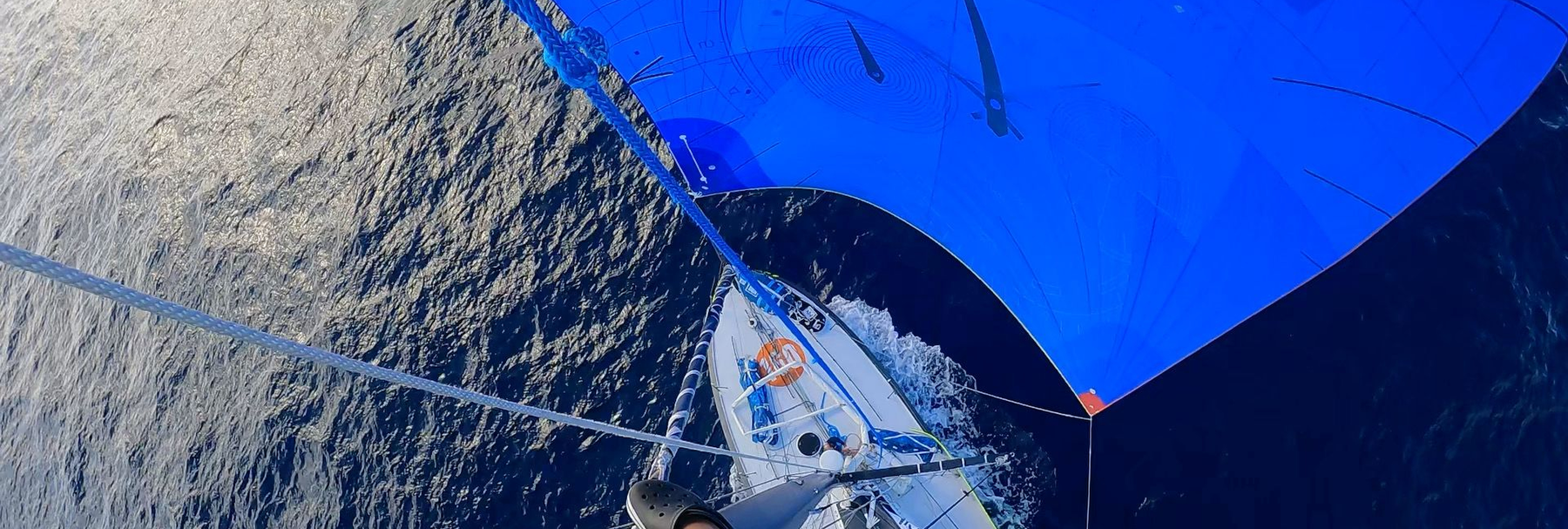
During the radio calls today it was obvious that one topic that is common to both the northern group and the southerners is routing…routing the other side of the course at least as much, if not more, than for the actual course chosen.
Routing the rivals?
“Yes we check in on the south from time to time but mostly we are just looking to see how best we can get ourselves to the finish line. We check in with the south but it is all pretty fickle. If we can get ourselves to the finish as fast as possible we have a very good chance of a good result.” Confirmed Pam Lee, the Irish skipper of #EmpowHer, who is lying in eighth place 30 miles behind the Spanish duo Pep Costa and Pablo Santurde.
But while Cedric Chateau on Seafrigo-Sogestran, the boat which leads the southern cavalcade, revealed that his co-skipper Guillaume Pirouelle is running routes for the northerly group five or six times a day and finding nothing definitive one way or another.
On the other hand in 15th on Inland Roots Ocean Soul, Milan Kolacek reveals, “To be honest we don’t even make a routing for the boats in the north. For now we just try to concentrate on the speed of the boat and the course and try to chase the boats which are a little bit faster than we are. So it about trying to the maximum we can.”
Czeched in
The skipper from the Czech Republic reports, “It is all good, we are trying to find the right balance trying not to lose miles on the leaders and just staying fast. We feel good, everything is well except we lost a kite close to Madeira.”
But in saying that, life is generally good. Temperatures have risen, the infernal slamming has lessened and most skippers today reflected on the weird space-time continuum they are living in, not least as they have at least nine days still to race of a course which was supposed to take between 12 and 16 days and Sunday we will be two weeks in. Little wonder teams have been checking their food supplies!
"It's true that we're still a long way off," confides Jean-Yves Aglae (Martinique Horizon). "The finish line is in the back of our minds, but it will be in ten days… There's still a lot to do." "We're in a kind of limbo," continues Pierre Brasseur (Inland Roots Ocean Soul). And then at sea, you can't really plan ahead: you don't take it day by day, but instead hour by hour.”
Asking the Duc
The Class40 fleet experienced a very different race from the other three classes (ULTIM, Ocean Fifty, and IMOCA). First, there was the stopover in La Coruña to avoid the worst of the low-pressure system, then the return to racing and the time for decisions. This was the only category where a major strategic choice split the fleet in two. Louis Duc, competing in the IMOCA class (Fives Group – Lantana Environnement), speaks with admiration of his fellow forty-footers' battle. “There are many very talented sailors in the Class40s. You can tell they're ignoring the rest of the fleet and are completely focused on their race. It's extremely close, forcing them to fight day after day, and we know that will keep them going until the very end.”
Don't take too many risks
“Don’t take too many risks.” Edgard Vincens (Phare 40 – Ha Plus PME) reiterates the maxim but the the fleet has split in two for the past four days. “The northern route is shorter, but it’s riskier because it requires crossing an anticyclonic ridge. The southern route allows you to reach the trade winds, except they aren’t well established. It lengthens the route, but it’s less boat-breaking, it’s downwind, and it’s faster.”
Lomano Takasi and Jean Marre (Réauté Chocolat) have also opted for the south. “We launched the project late; we only had two months to prepare, and this is the first day I haven’t had to get out the toolbox,” Lomano confides. In such circumstances, taking risks and heading north is out of the question. “We knew for a while that we were going to pay for our lack of preparation, but the main thing is to keep racing and not take too many risks.”
So everyone continues on their way, enjoying the little joys that come with it. The southerners can thus take advantage of the increasingly high temperatures, and it feels good. “We can take off our boots and oilskins and get out our T-shirts and sunscreen,” smiles Edgard Vincent. “It’s like a new race is starting.” Now, it’s time for downwind sailing, with the aim of always “preserving the equipment” and “having as much fun as possible.”
Disconnection
“You really feel like you’re disconnecting from land.” Among amateurs and professionals alike, the idea is that this adventure must be lived to the fullest and that it’s important to accept it as such, with its twists and turns and uncertainties. “Even though the southern route is technical, life on board is more pleasant, the waves are less harsh, and it’s less cold,” smiles Jean-Yves Aglae. “We’re not going to complain about where we are; we signed up for this!”
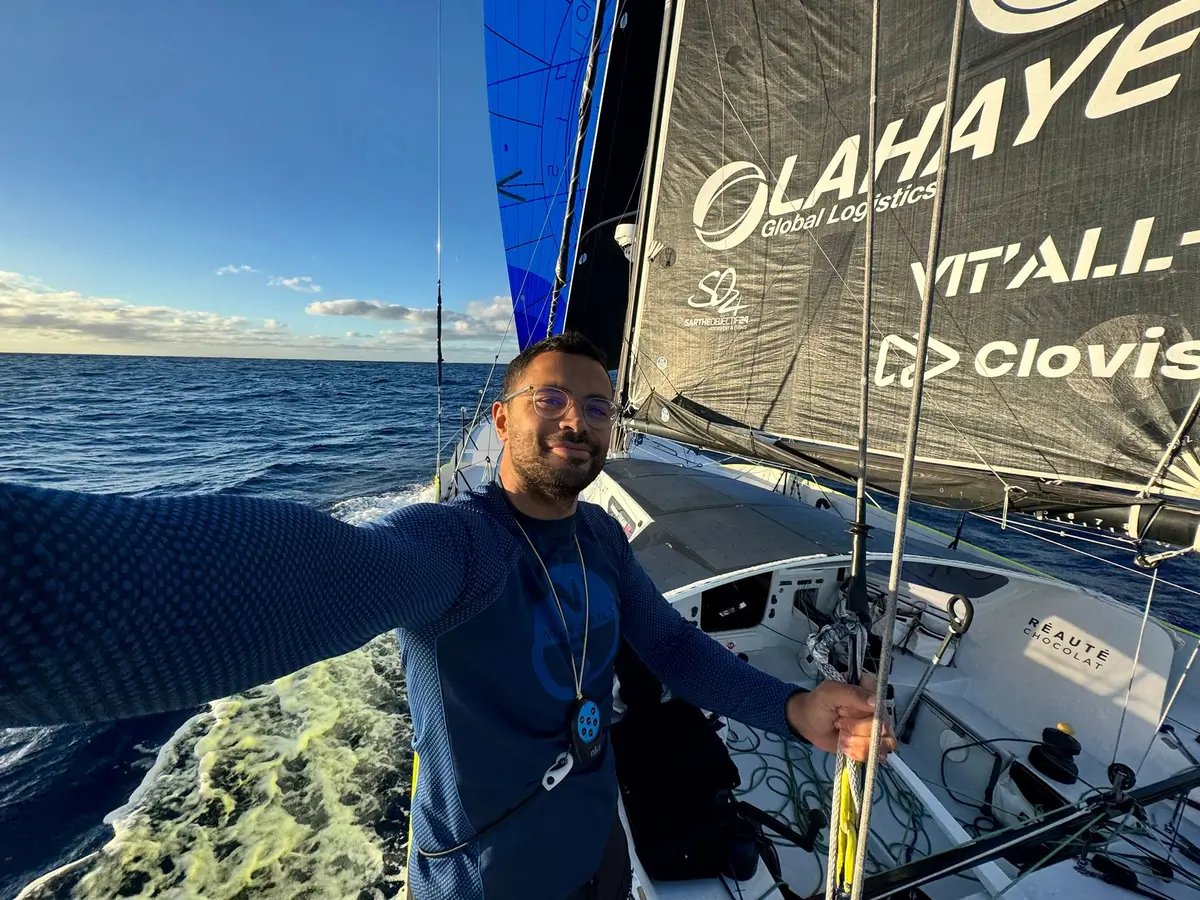
 08/11/2025 Radio vacation with Pierre Brasseur and Milan Kolacek