
TCO25_TeamSNEF_5thIMO_0811JLC_4508

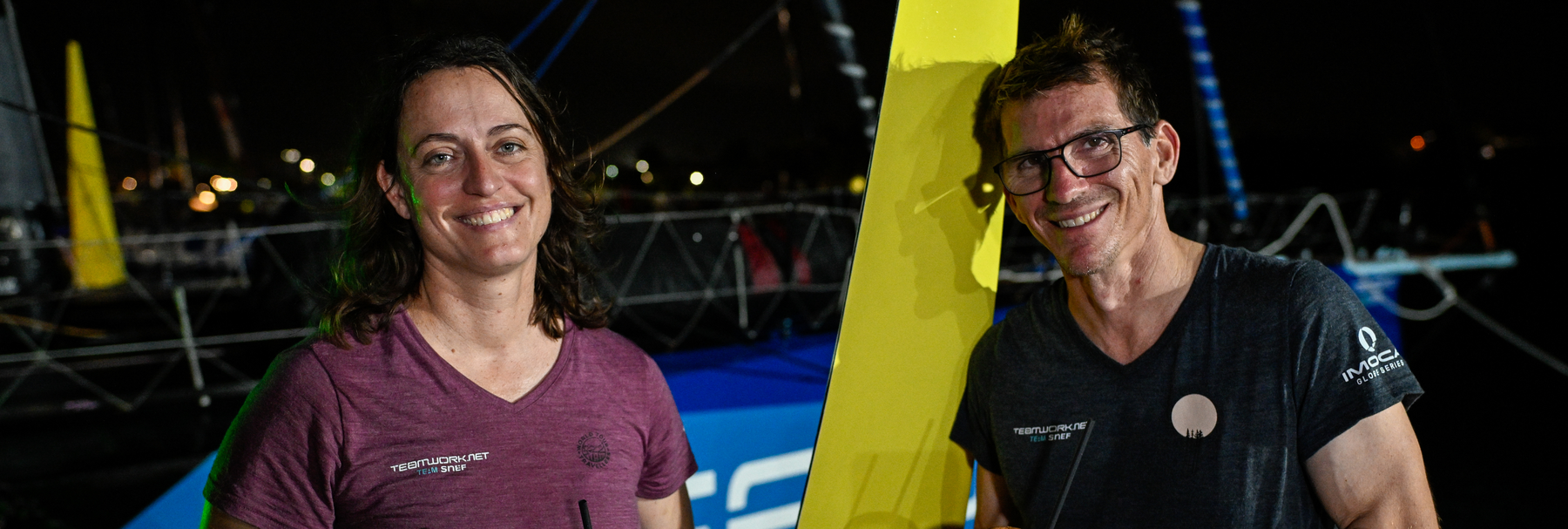
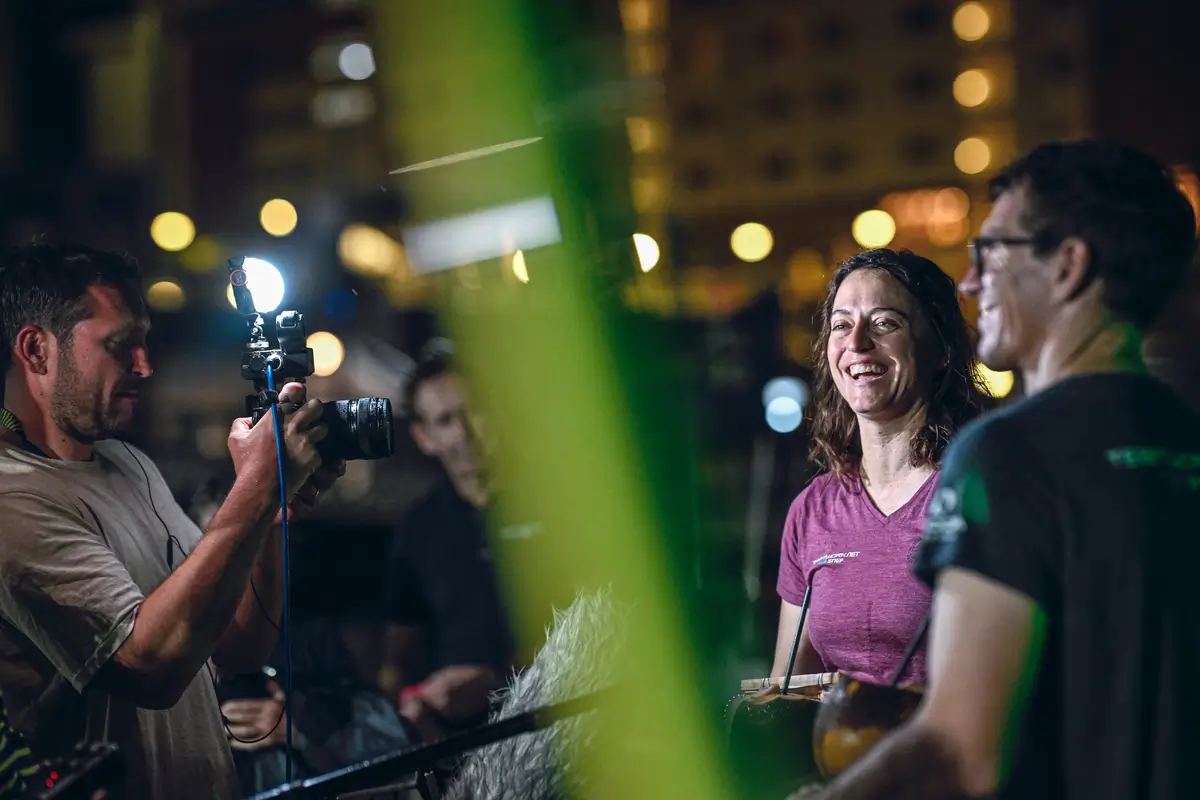
Justine Mettraux and Xavier Macaire at the dock

08 November 2025 - 12h05
Looking tired but very happy Swiss skipper Justine Mettraux and Vendéen co-skipper, former Figaro ace Xavier Macaire arrived at the Fort-de-France victory pontoon in the small hours of Martinique’s morning. They took fifth place, a position they were largely satisfied with, not least as they got the better of the boats of their generation and speed potential after some close racing.
And Mettraux, who learned her early racing skills on Lake Geneva, maintains a very consistent, high level of results in the IMOCA class, including her excellent eighth in the last Vendée Globe. During this race she learned that she had won the award of Rolex Woman Sailor of the Year as public recognition for her Vendée Globe result.
And it promises to be onwards and upwards for ‘JuJu’ as she has a new IMOCA in build and so this was her last race with the VPLP designed TeamWork-Team SNEF. Meanwhile co-skipper Macaire completes his second IMOCA Transat.

Here are the highlights of what Justine and Xavier had to say on the dock

Justine: I'm doing well, I think we're both pretty tired. The last few days of the race were really intense. Lots of gybes to execute, a lot of maneuvers. Also trying to make the boat sail well too, to leave the others behind. So it's great that we managed to do it, but it took a lot of work.

Did you have many breaks?
Xavier: We didn't have many breaks. No, we didn't stop. The goal of the race is to finish ahead of the others. So if you stop... No, we had a few minor technical issues, but nothing that held us up. We were able to resolve all our problems during the race.

So we kept going. We did have a hook break, though. So we were able to go up the mast. Justine helped me up the mast. We changed the part, and that was it. No more little things, but every time... Justine did a fantastic job on all the little repairs to keep the boat in such great condition from start to finish.So it was great. Yeah, awesome.

How are you feeling after the finish? You told us you were pretty tired. 
Justine: It was an intense race, even though there was the very light spells at the Canary Islands. But it was very intense; we had to keep up the pace. It was really intense. The beginning of the race was a bit more strategic. And then for the rest of the race, it was strategy and speed.

So we tried to keep up the pace as best we could. But unfortunately, we could see that we couldn't keep up with the newer boats. But we tried to play our cards right with Bureau Vallée and Initiative Coeur, which are boats that best suit our performance. So it was great to have a bit of a battle within the battle, a bit of a second division, if you will, towards the end of the race. And as a result, it took quite a bit of energy to stay ahead.
TCO25_TeamSNEF_5thIMO_0811JLC_4505
© Jean-Louis Carli / Alea

And you, Xavier, you've done some smaller transatlantic races, this is your second on an IMOCA, what's the difference?

Xavier: In my case the 2019 race finished in Brazil, which is great too. It's different on a bigger boat, it's faster. It's also a bit more stressful sometimes, even though in Class40 it's still stressful. And in Ocean Fifty it's stressful too. Basically, every transatlantic race is a bit stressful because we're pushing the boat to its limits. This time, we had top speeds of 32 knots in a rough sea where the boat was crashing into waves. So it creates a lot of stress, there's a lot of tension. We're very careful not to make any mistakes, because a mistake can be very serious right away. Breaking a mast can be fatal..

We had trouble sleeping because of the tension of the finish, which was approaching with a lot of maneuvers, the DCPs (Sea life preservation areas) we had to avoid. And then it was slamming a lot. So it's hard to fall asleep when the boat is slamming and moving so much.

What did you learn most from Justine during these 12 days of racing? 
Xavier: How to make the boat sail. It's more of a duo. I think we learned together how to form our duo, how to make it work, how to make it function.And to find the right reference points, the right settings, the right strategic communications, all of that. So I think we made the pairing work more than one of us made the other work. I think that's it.

Justine: In the Transat races, like this, sailing double-handed, it's always a team effort. But I also learned from Xavier on this race. So it's not just a one-way street. And it is great to share.

You’ve been incredibly consistent since the beginning of this project, in the top 8, in almost every race. Is that what you're most proud of over the last few years?

Justine: Yes, it's great. It's true that I was thinking we finished all the races we participated in, always in the top 8. So that's great. It's very satisfying for me. It means we were always competitive, that the boat was always properly prepared by the team so there wouldn't be any major issues that would jeopardize finishing a race. So all of that is great and it's a good reward for me and the whole team.